The Diaspora Lifeline That Helps Keep Somali Families Afloat
Somalia’s economy continues to lean on one of its strongest and most enduring pillars, its global diaspora. Every month, millions of dollars are sent home by Somalis living abroad, forming a financial lifeline that keeps families afloat,
TSBy TheAfricaPlus StaffNovember 8, 2026 3 min read 224 views
Economy · TheAfricaPlus picture desk
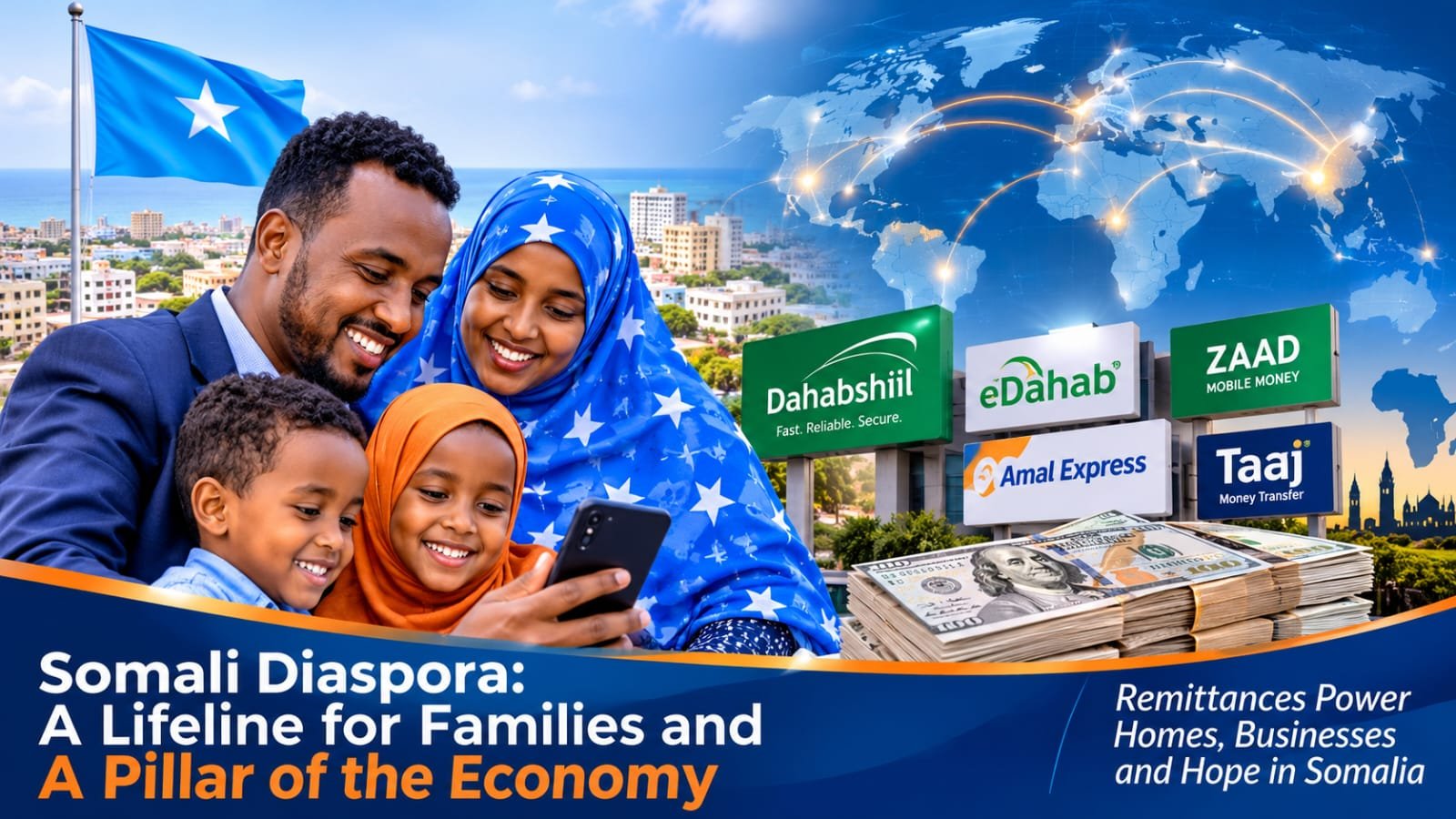
Mogadishu, Somalia, by the Africa Plus Editorial TeamSomalia’s economy continues to lean on one of its strongest and most enduring pillars, its global diaspora. Every month, millions of dollars are sent home by Somalis living abroad, forming a financial lifeline that keeps families afloat, fuels small businesses, and helps stabilize a country still rebuilding after decades of conflict. According to the World Bank, the Somali diaspora sends an estimated $1.3 billion back home each year, a figure equal to nearly 30 percent of the country’s GDP. In many years, this amount surpasses international aid and foreign direct investment combined. For countless households, these remittances are not extra income they are survival. The funds move through well-known money transfer companies such as Dahabshiil, Amal Express, and Taaj. Over time, these companies have evolved, blending long-standing community trust with modern technology. The growth of digital wallets like E-Dahab and Zaad has made sending and receiving money faster and more accessible, even in rural areas where traditional banking services are almost nonexistent. “Remittances are the backbone of the Somali economy,” says Dr. Abdullahi Warsame, an economist based in Mogadishu. “Without this steady flow of funds, poverty would rise sharply and local markets would struggle to survive.” Yet the system is not without challenges. International banking regulations tied to anti-money laundering and counter-terrorism financing have placed pressure on Somali money transfer operators. At times, correspondent banks in Europe and North America have cut ties, creating uncertainty and threatening to interrupt the flow of money that so many families depend on. For ordinary households, these transfers pay for rent, school fees, medical care, and daily necessities. Small traders rely on them to restock their shops, buy livestock, or expand transport services. In many towns, remittance money circulates quickly, sustaining entire local economies. At the same time, experts caution that such heavy reliance creates vulnerability. If diaspora communities abroad face job losses, stricter migration policies, or new financial restrictions, the impact back home would be immediate. While remittances have provided stability, they also reflect deeper structural weaknesses in the domestic economy. Limited job creation and slow industrial growth mean that Somalia continues to depend heavily on income generated outside its borders. Economists argue that turning remittance flows into long-term investment will be crucial for sustainable growth. Somalia’s central bank, alongside international partners such as the World Bank and the African Development Bank, has been working to strengthen regulation, expand financial inclusion, and encourage diaspora investment in larger development projects. The goal is to move beyond short-term relief and channel these funds into productive sectors that can generate employment and reduce long-term dependence. For more than three decades, the diaspora has quietly carried much of the country’s economic weight. Their support has been steady, resilient, and deeply personal — driven not by policy but by family ties and responsibility. For now, remittances remain Somalia’s quiet miracle, a powerful reminder that even across oceans and continents, the bond between families continues to sustain a nation.